Legal intake is the process an in-house legal team uses to receive, qualify and route requests from the business. It comes before the substantive legal work: who needs what, by when, with which documents and business stakes? Its purpose is to give counsel a workable starting point rather than an incomplete email to reconstruct.
A practical definition of legal intake
Intake means taking charge of incoming requests. An HR question, a supplier contract review and a formal demand require different context and handling. Legal intake organizes this first step; it does not replace legal analysis.
Illustrative example: a buyer writes “Can you approve this agreement by Friday?” Counsel still needs the signing entity, the service being purchased, the version to review and the reason for the deadline. Good intake brings that context together before routing the request.
How does legal intake work?
A request may start in a portal, a form or a mailbox. The channel matters less than preserving context and making ownership visible. A simple process has four stages:
- Capture the request and supporting documents through an identified entry point.
- Qualify the subject, requester, entity and expected deadline.
- Assess priority with counsel: risk, business impact and actual constraints.
- Assign an owner and tell the requester what happens next.
Legal intake, Legal Front Door and legal ticketing: the differences
The Legal Front Door is the visible entry point to the legal department: where business users know to submit their needs. Legal intake is the capture and qualification process behind that door. The terms are closely related, but not identical.
Legal ticketing tracks what happens next: status, ownership, conversations and deadlines. Matter management covers the life of the matter, its documents, actions and participants. CLM focuses on the contract lifecycle. These functions can connect without having the same scope.
Why structure incoming legal requests?
Without intake, one issue can be scattered across a salesperson’s email, an attachment and a tracking spreadsheet. The difficulty is not simply receiving the request: it is knowing whether someone owns it and finding the right context.
Structuring intake can reduce back-and-forth, make workload visible and help explain priorities. These benefits are not automatic. An overly long form, confusing categories or silence after submission can discourage adoption.
Juriview: legal intake in an intuitive, fully centralized workspace
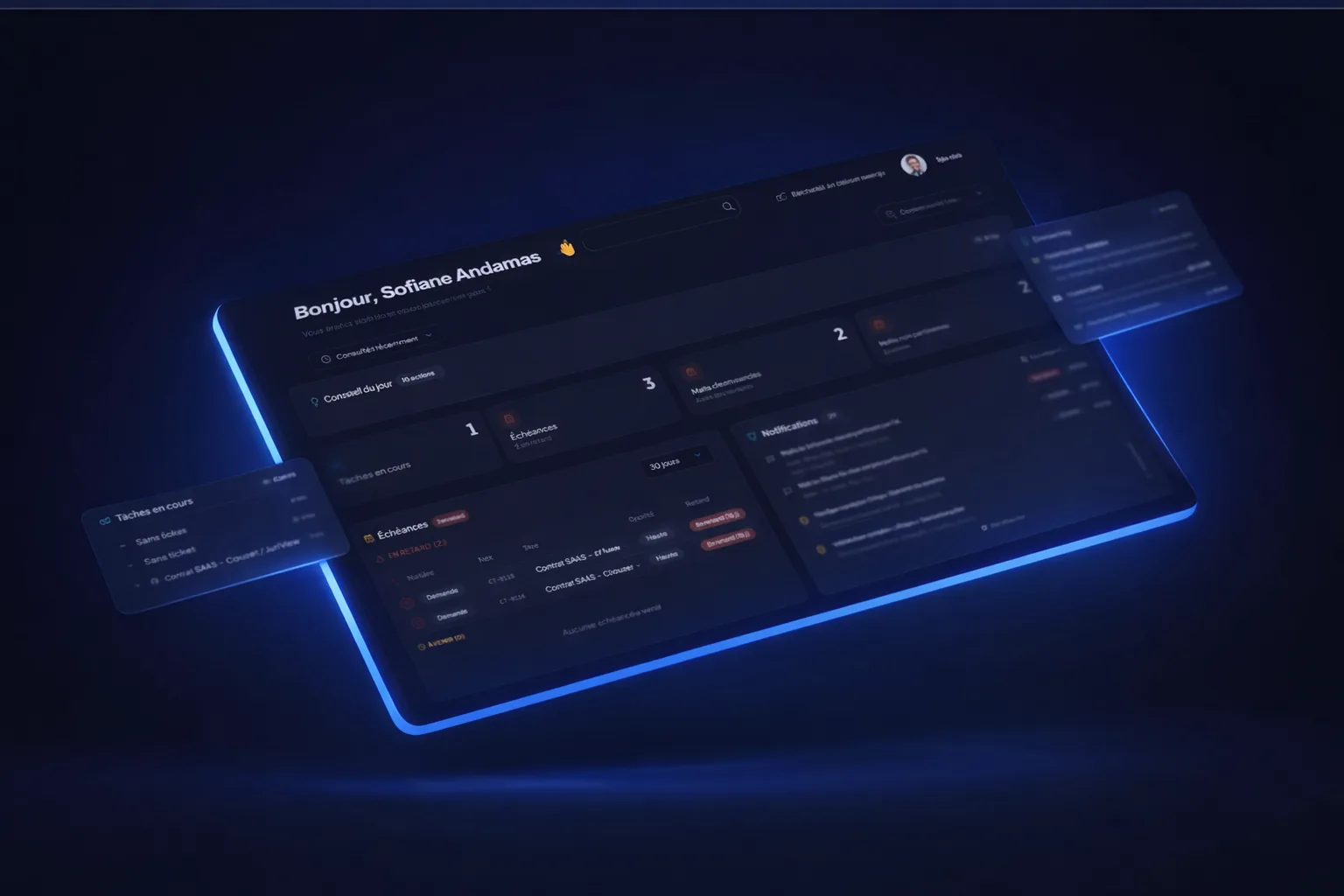
Juriview positions Legal Intake within its intuitive, fully centralized working environment. A request is not an isolated form: it connects to legal ticketing, matters, documents, contracts and deadline tracking.
Email-based ticket creation and the business user portal provide entry points to legal. Counsel can work with conversations and documents in the same environment as approval workflows, document management and electronic signature. The aim is to avoid copying context from one tool to another.
AI assists analysis within the scope of the company’s internal data. Counsel remains responsible for decisions and validation. Centralization does not mean every employee can access every document: access rights remain an essential selection criterion.
Where should you start?
First map your channels and the information most often missing. Choose a frequent request type, such as supplier contract review, and test a short intake process with the relevant teams. Check whether matters arrive with better context and requesters understand their status.
Good legal intake does not ask business users to become lawyers. It helps them express a need and gives the legal team a continuous path for handling it.
Legal intake: frequently asked questions
Is legal intake only for contracts?
No. It can cover HR, compliance, corporate or litigation requests. The information needed depends on the subject.
Does legal intake replace legal ticketing?
No. Intake organizes capture and qualification; ticketing organizes follow-up. A centralized workspace can connect the two stages.
Is a form enough to create a legal intake process?
No. The process also needs ownership, qualification, routing and feedback to requesters.
See legal intake in Juriview
Let’s discuss your incoming requests and their follow-up, from first contact to legal matter.
Schedule a demo